
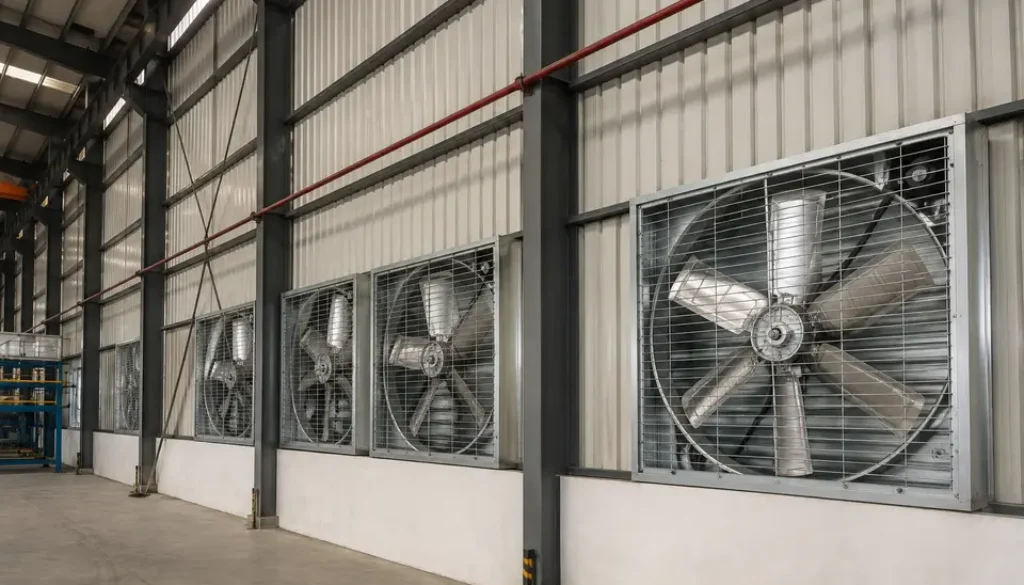
How to Choose a Heavy-Duty Industrial Exhaust Fan for Your Facility
Introduction
Industrial facilities across the UAE generate heat, fumes, dust, and moisture that must be removed quickly and reliably to keep operations safe. A heavy-duty industrial exhaust fan is built to handle these demanding conditions day after day, without the frequent breakdowns that lighter equipment suffers under continuous industrial use. Choosing the right heavy duty industrial exhaust fan for a specific application is not always straightforward, and getting it wrong can mean poor ventilation, high energy bills, or an early and costly replacement. This guide covers the factors that matter most when selecting one for your facility.

What Sets a Heavy-Duty Fan Apart from a Standard Fan
A standard commercial fan is designed for light, intermittent use in offices or retail spaces. A heavy-duty industrial exhaust fan, by contrast, is engineered for continuous 24-hour operation in harsh conditions. This means thicker steel or FRP housings, larger and more robust bearings, motors built with higher insulation classes, and blade designs that can handle dust, grease, or chemical-laden airflow without losing balance or efficiency over time. When comparing options, ask suppliers directly how their fans are built to survive continuous industrial duty, not just how they perform on a spec sheet.
Matching Airflow Capacity to the Application
The single biggest mistake buyers make is selecting a fan based on size alone rather than actual airflow requirements. A heavy-duty industrial exhaust fan needs to be sized against the real air change rate needed for the space, the heat load generated by machinery and processes, and any make-up air arrangements already in place. Undersized fans struggle constantly and burn out faster, while oversized fans waste energy and create excessive noise. A proper airflow calculation, done before purchase, prevents both problems.
Motor Class and Ambient Temperature
UAE summer conditions place unusual stress on exhaust fan motors. A heavy-duty industrial exhaust fan destined for outdoor or rooftop installation, or for use near hot process equipment, should carry a motor with Class F or Class H insulation as a minimum. IE3 premium efficiency motors are worth the modest extra cost, since they run cooler and consume less electricity over thousands of operating hours a year. Ask your supplier for the motor’s rated ambient temperature and confirm it comfortably exceeds the conditions the fan will actually face.
Construction Material for the Operating Environment
Not every heavy-duty industrial exhaust fan needs to be built from the same material. Galvanized or powder-coated steel is a cost-effective choice for dry, non-corrosive environments such as general warehouses and workshops. Where chemical fumes, high humidity, or salt-laden coastal air are present, FRP fiberglass construction resists corrosion far better than steel and lasts significantly longer without protective recoating. Choosing the wrong material for the environment is one of the most common causes of premature fan failure in the UAE.
Noise Levels and Vibration Control
Heavy duty industrial exhaust fans move large volumes of air, and that airflow generates noise. In facilities where workers spend long shifts near the fan, sound pressure levels should be checked against workplace exposure limits. Fans with properly balanced impellers and vibration-isolating mounts run quieter and place less stress on the supporting structure and ductwork over time, reducing maintenance needs and extending service life.
Maintenance Access and Spare Parts Availability
Even the best heavy duty industrial exhaust fan needs periodic maintenance: bearing lubrication, belt inspection, and impeller cleaning. Before purchasing, confirm that the supplier stocks common wear parts locally and can provide service support within a reasonable response time. A fan that performs perfectly on paper but leaves you waiting weeks for a replacement bearing is not a good long-term investment.
Related post – Where to Find Exhaust Fan Suppliers in UAE
Presto: Supplying Heavy-Duty Industrial Exhaust Fans in the UAE
Presto supplies heavy duty industrial exhaust fans built for continuous operation in UAE industrial and commercial environments. Their range covers multiple airflow capacities, motor specifications, and construction materials, backed by technical guidance to help each customer match the right fan to their specific application and after-sales support to keep it running reliably.

Conclusion
Selecting a heavy-duty industrial exhaust fan is a decision with long-term consequences for worker safety, energy costs, and operational reliability. By focusing on build quality, correctly matched airflow capacity, motor specification for UAE ambient conditions, appropriate construction material, noise control, and ongoing maintenance support, facility managers can choose equipment that performs reliably for many years. Presto’s technical team is available to help UAE businesses select the right heavy duty industrial exhaust fan for their specific operational needs.
